Leave Your Message
A compact home setup can make strength training easier to sustain. Adjustable Kettlebells combine several weight options in one tool, freeing floor space while allowing gradual load changes. That matters when a light bell feels manageable for presses, but too easy for squats or deadlifts. Still, convenience alone does not make every model safe or comfortable.
The American College of Sports Medicine’s 2024 Worldwide Survey of Fitness Trends ranked wearable technology first among 45 trends, reflecting the industry’s growing interest in tracking and adapting workouts. The survey does not measure kettlebell sales or prove that adjustable models outperform fixed weights. It does offer useful context: home exercisers increasingly expect equipment to support flexible training. For practical guidance, we also look to Pavel Tsatsouline, kettlebell coach and StrongFirst founder, who describes the kettlebell as “an ancient Russian weapon against weakness.” His line celebrates the tool, not a particular adjustable design. A careful distinction.
This guide compares seven options by weight range, adjustment mechanism, grip, footprint, and reported durability. We consider whether changing plates feels secure, whether the handle stays comfortable during longer sets, and how much room each bell needs beside a mat. Product claims deserve scrutiny; small design details can matter more than a dramatic weight range. No single model suits every home or training level. Expect trade-offs.
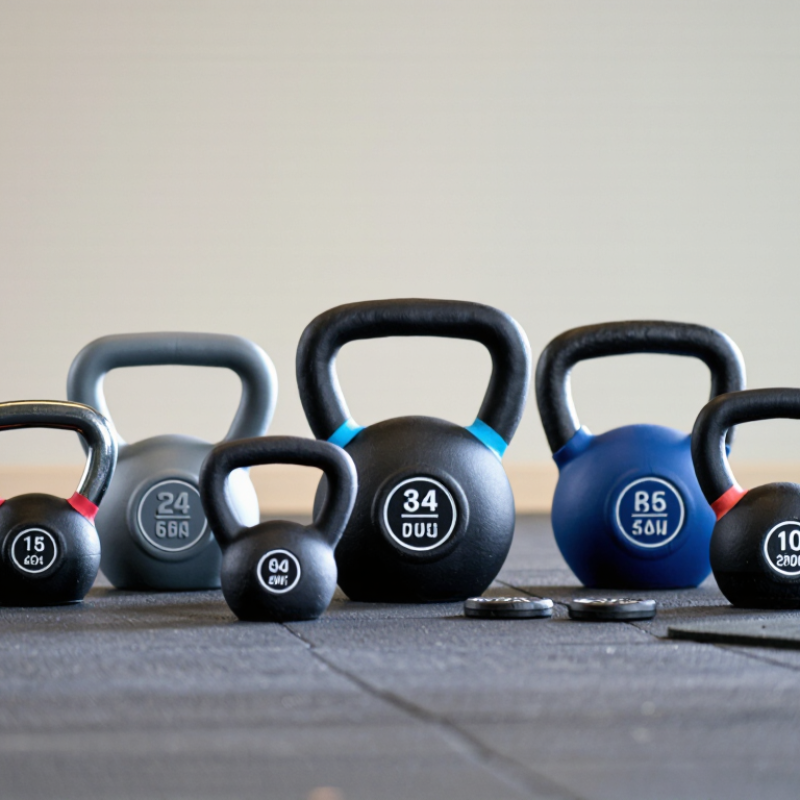
An adjustable kettlebell changes load through removable plates or a locking selector, depending on its design. Instead of storing several fixed-weight bells, you keep one handle and alter its resistance. The shell may feel bulkier than a traditional bell, and the weight distribution can change as plates are removed. Notice that difference. Before each set, check that every plate is seated and the locking mechanism is secure; a loose load can shift during swings or cleans.
For home training, start with a weight you can control through a full range of motion. Practice a slow deadlift before attempting faster swings. Keep your wrist neutral, brace your trunk, and let your hips—not your lower back—drive the movement. Small steps matter. Adjustable increments can support gradual progression, but adding weight too quickly may compromise technique. I’ve found that the “right” load is less obvious during a dynamic swing than during a press, so test unfamiliar settings with controlled repetitions first.
The American Council on Exercise’s 2010 kettlebell study reported an average energy expenditure of 13.6 calories per minute during a vigorous snatch workout. It involved only 10 participants and a specific protocol, so that figure should not be treated as a typical result for every person or adjustable bell. The study does show that kettlebell work can be demanding. Rest between sets, and stop if your grip or posture starts to fail.
Adjustable kettlebells use removable plates, interchangeable weight modules, or a selector mechanism to change resistance. The ranges below are representative configurations, not universal specifications; check the individual product’s weight range, increments, and safety instructions before buying.
| Type | Representative weight range | How adjustment works | Best suited to | Key consideration |
|---|---|---|---|---|
| 1. Dial-selector kettlebell | Some common models cover approximately 8–40 lb (3.6–18.1 kg). | A dial or selector locks the required plates into the handle; unused plates remain in the base. | Home workouts that need quick weight changes. | Check the available preset weights and make sure the selector is fully locked before lifting. |
| 2. Metric selector kettlebell | A common configuration is 12–32 kg, with 2 kg steps. | A selector changes how many internal weight plates are attached to the handle. | Lifters who prefer kilogram-based loading and a broad strength range. | The kettlebell can be relatively large, even at lighter settings. |
| 3. Competition-style adjustable kettlebell | Some designs adjust from 16–24 kg in 2 kg increments. | Internal plates are added or removed, usually by opening the shell with a tool. | Experienced kettlebell users who value a competition-style shape. | Changing weight is slower than using a dial-selector design. |
| 4. Compact plate-loaded handle | Weight depends on the handle and compatible plates; some setups are designed for light-to-moderate loads. | Weight plates slide onto the handle and are secured with a collar or locking system. | Small home gyms that already have compatible weight plates. | Confirm plate-hole compatibility and secure the collar before every set. |
| 5. Heavy-duty plate-loaded handle | Capacity varies by handle and plates; some compatible setups allow heavier loading than compact designs. | Additional compatible plates are added to a longer or sturdier loading section. | Stronger lifters who need more loading potential without buying several fixed-weight bells. | Check the stated maximum load; a longer loading section may change balance and feel. |
| 6. Modular weight-stack kettlebell | Range and increments depend on the included weight modules. | Individual weight sections are stacked onto the handle and secured together. | Users who want a straightforward, visibly adjustable design. | Changing weights takes handling time, and loose or mismatched parts should not be used. |
| 7. Screw-lock plate-loaded kettlebell | There is no standard range; capacity depends on the handle, plates, and lock. | Plates are added to a threaded handle and held in place with a screw-on cap or collar. | Budget-conscious users who already own compatible plates. | Inspect the threads and tighten the lock as directed; avoid swinging if the plates are not secure. |
Buying tip: Compare the full weight range, smallest adjustment step, grip comfort, footprint, and locking method. For ballistic exercises such as swings, use only a design that the manufacturer approves for dynamic movements.