Leave Your Message

How to Choose a Portable Kettlebell Supplier?

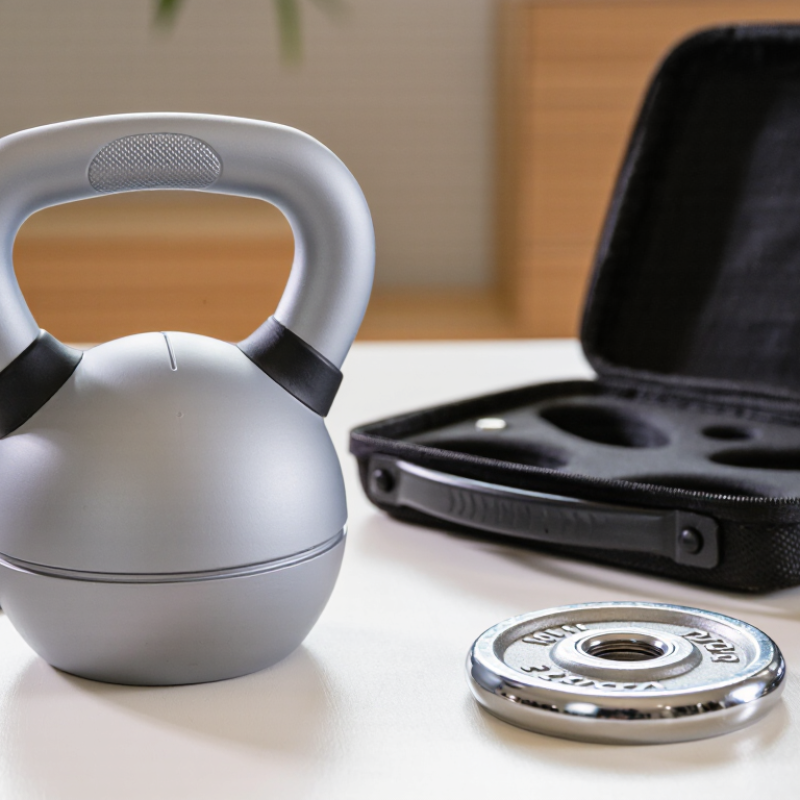
Choosing a Portable Kettlebell supplier requires more than comparing prices and product photos. The right partner must deliver safe materials, consistent weight, comfortable handles, and dependable after-sales support. A compact training tool may travel in a suitcase, yet its manufacturing details can affect every swing, carry, and clean.

Pavel Tsatsouline, a respected kettlebell educator, is widely credited with saying, “The kettlebell is a gym in your hand.” That idea makes supplier quality especially important. A poorly balanced bell can feel unstable during training. A weak locking mechanism may loosen during repeated movement. Small defects become serious concerns.

Look closely.

This guide explains how to assess a Portable Kettlebell supplier through samples, factory experience, material testing, weight accuracy, packaging, and warranty terms. Ask whether the supplier uses durable steel, reinforced plastic, or another clearly specified material. Check handle texture, adjustment systems, surface finish, and resistance to sweat and transport damage. Request test reports, production photographs, and customer references when available.

A polished catalog proves little. I have learned that attractive packaging can distract buyers from unclear tolerances and vague warranty promises. That is an uncomfortable point, but it deserves attention. A reliable supplier welcomes practical questions and explains limitations honestly. Lead times, minimum order quantities, replacement policies, and customization fees should appear in writing.

The strongest choice balances engineering, usability, communication, and long-term value. Not the cheapest offer. Not always.
How to Choose a Portable Kettlebell Supplier?

Define Portable Kettlebell Needs by Weight, Load Range, and Use Case

How to Choose a Portable Kettlebell Supplier?

Define Portable Kettlebell Needs by Weight, Load Range, and Use Case

Portable kettlebell selection should begin with the user, not the supplier’s catalog. For travel workouts, measure storage space, total carrying weight, and handle comfort. For home strength training, choose a load range that supports swings, goblet squats, presses, and carries. A beginner may need 4–12 kg, while experienced users often require heavier options. These figures are practical starting points, not fixed rules. Body size and movement skill still matter.

The World Health Organization recommends 150–300 minutes of moderate activity weekly, plus muscle-strengthening exercises on two or more days. ACSM’s 2024 Worldwide Survey of Fitness Trends ranked traditional strength training fifth, showing continued demand for reliable resistance equipment. Ask suppliers for load-test records, adjustment limits, handle dimensions, and product failure rates. A compact design is useful only when it remains stable under repeated movement.

Tips: Request a sample before bulk purchasing. Test the handle with sweaty hands. Check whether the base sits flat on hard floors. Confirm the stated weight with a scale. Inspect locking parts after repeated adjustments.

I once focused too heavily on minimum packed size. That was a mistake. A smaller unit can become awkward when its handle is narrow or its balance shifts.

Also compare warranty terms, replacement parts, packaging protection, and independent quality documentation. Supplier claims deserve verification.

Verify Supplier Compliance with ISO 20957-1 and ASTM F2276 Standards

How to Choose a Portable Kettlebell Supplier?

When selecting a portable kettlebell supplier, request evidence of compliance with ISO 20957-1. This standard addresses safety requirements for stationary training equipment. A portable kettlebell may not fit its scope automatically. Ask the supplier to explain the exact application in writing. The certificate should name the manufacturing site, product category, and valid testing period. A copied certificate proves very little.

Look beyond paperwork. Request test reports for handle strength, weight accuracy, surface durability, and repeated impact resistance. Check whether an independent laboratory issued the report. Product samples should match the tested production version. Inspect the handle closely. Sharp edges, loose coatings, or uneven grips can create problems during ordinary home workouts. Small details matter.

ASTM F2276 also requires careful verification because it is generally associated with play yard safety, not kettlebells. A responsible supplier should clarify why this standard is relevant, or identify a more suitable requirement. Do not accept vague claims. Ask for the edition, test method, laboratory identity, and traceability records for each batch. In practice, buyers often focus on the certificate and overlook production changes. That is a weakness worth challenging. Good suppliers welcome specific questions, though some documentation may still need independent review.

How to Choose a Portable Kettlebell Supplier? - Verify Supplier Compliance with ISO 20957-1 and ASTM F2276 Standards

Verification Dimension Relevant Standard or Requirement Evidence to Request from the Supplier Practical Acceptance Criteria Recommended Verification Method Risk Level
Scope and standard identification ISO 20957-1 covers general safety requirements and test methods for stationary training equipment. ASTM F2276 covers general requirements for fitness equipment. A written compliance statement identifying the exact product models, revisions, and applicable clauses. The supplier clearly explains which requirements apply to the portable kettlebell and does not describe either standard as a supplier “certification.” Compare the statement with the current standard scope and the product’s intended use. High
Product configuration General safety evaluation should cover the actual configuration placed on the market. Technical drawings, parts list, photographs, dimensions, weight range, and operating instructions. Documents match the supplied sample, including handle, locking mechanism, plates, pins, base, and adjustment controls. Perform a document-to-sample comparison before approving production. High
Stability and tipping resistance Relevant general safety principles include stability during intended use and prevention of foreseeable overturning. Stability test procedure, test setup, maximum permitted load, and test records. The fully assembled unit remains stable during the supplier’s documented intended-use and foreseeable-misuse assessment, with no unexpected release of adjustable parts. Witness a representative test using the highest advertised configuration and a level, hard surface. High
Handle strength and grip security Fitness-equipment safety assessment should address structural integrity, secure gripping surfaces, and resistance to separation. Handle material specification, attachment design, static-load test records, and fatigue-test procedure. No cracking, detachment, permanent deformation, sharp damage, or loss of grip after the documented test sequence. Review laboratory records and inspect samples before and after testing. High
Adjustable-weight locking system Moving or adjustable components should not create foreseeable hazards or release unexpectedly during use. Locking-system drawings, operating instructions, cycle-test results, and failure-mode analysis. The selected load remains locked during repeated handling and exercise simulations; the user can verify engagement through a clear indicator or tactile stop. Conduct repeated lock/unlock cycles and drop-free handling checks using production samples. High
Pinch, shear, and entrapment points ISO 20957-1 and ASTM F2276-based reviews should consider accessible hazards created by moving parts and adjustment mechanisms. Hazard analysis, clearance assessment, product photographs, and user-instruction warnings. No accessible sharp edges or unguarded pinch points in normal adjustment and carrying positions; unavoidable hazards are clearly identified. Inspect the product in every adjustment position and during simulated user actions. High
Materials and corrosion resistance Materials and finishes should remain suitable for the intended indoor or controlled commercial environment. Material declarations, coating specifications, corrosion-test method, and restricted-substance documentation where applicable. No flaking coating, exposed corrosion, harmful odor, or material degradation that could affect safe handling under the stated conditions. Check incoming samples, finish thickness records, and environmental test reports. Medium
Weight accuracy and labeling Product information should be accurate, legible, durable, and consistent with the tested configuration. Weight-tolerance specification, calibration records, rating labels, warnings, and user manual. Actual net weight and adjustable range agree with the declared values; labels remain legible after routine handling and cleaning. Weigh randomly selected production units using calibrated equipment and verify label content. Medium
Durability and repeated-use testing Fitness equipment should withstand intended repeated use without creating new safety hazards. Test plan, number of cycles, applied loads, acceptance criteria, failures, and corrective-action records. The tested sample completes the defined cycle program without structural failure, loose components, or unsafe deterioration. Confirm that the test represents the maximum load and highest-stress use case. High
Quality management and traceability ISO 20957-1 and ASTM F2276 address product safety; an ISO 9001 certificate, if provided, concerns the management system rather than automatic product compliance. Quality certificate, certificate scope and validity, batch records, inspection plans, and nonconformity procedures. Certificate details are independently verifiable, production batches are traceable, and corrective actions are documented. Verify the certificate issuer, scope, validity, manufacturing site, and audit status. Medium
Independent laboratory testing Independent testing can support, but does not replace, a complete review of the applicable standard requirements. Complete test report, laboratory accreditation details, test date, sample identification, methods, results, and deviations. Report covers the exact model and configuration, includes pass/fail conclusions, and contains no unexplained deviations. Contact the laboratory using independently verified contact information. High
Instructions, warnings, and maintenance Safety information should describe assembly, adjustment, inspection, cleaning, storage, user limitations, and foreseeable misuse. English user manual, warning labels, maintenance schedule, spare-parts list, and disposal guidance. Instructions are clear, model-specific, permanently associated with the product, and consistent with the tested design. Review the manual with a user unfamiliar with the product and record comprehension issues. Medium
Production consistency Safety conclusions apply only when mass-produced units remain equivalent to the tested sample. Pre-production approval record, incoming inspection criteria, in-process checks, final inspection records, and change-control procedure. Material, dimensions, locking components, coatings, labels, and packaging controls are documented and consistently inspected. Audit the production line and inspect samples from at least three separate batches. High
Important: ISO 20957-1 and ASTM F2276 are product-safety standards, not automatic approvals of a supplier. Request evidence for the exact portable kettlebell model, configuration, manufacturing site, and production batch.

Compare 8–48 kg Competition Weights, Materials, and Handle Dimensions

When choosing a portable kettlebell supplier, compare more than the printed weight. Competition models commonly range from 8 to 48 kg, with similar external dimensions across the series. This uniform shape supports consistent technique, but it does not guarantee comfort. Ask for verified weight tolerance, center placement, and base stability. An 8 kg bell may suit conditioning, while a 48 kg bell requires stronger packaging and safer delivery handling.

Material changes the training feel. Steel competition kettlebells usually provide consistent dimensions and a clean, durable surface. Cast iron models can feel denser, but their sizes often increase with weight. Check the coating for bubbles, sharp edges, and peeling around the handle. Handle width, height, and diameter deserve a measurement sheet. Many adult competition handles fall near 33–35 mm in diameter, but this range is not universal. Smaller hands may prefer a narrower grip. Larger hands may need more clearance. Small details matter.

Supplier reliability appears in the evidence provided. Request sample measurements, load-testing records, close-up photos, and clear replacement terms. Do not judge quality from polished product images alone. I once underestimated handle transitions, and a tiny ridge became irritating during repeated cleans. That mistake was avoidable. A sample inspection should include chalk grip, wrist clearance, weld quality, and flat-base contact. For a portable order, also check carton strength and individual bell protection. Record every dimension before approving the full shipment.

How to Choose a Portable Kettlebell Supplier?

Reference comparison of competition-style kettlebells from 8–48 kg. Competition models commonly use a consistent external form across weight classes, with a steel or iron body and a powder-coated or e-coated finish.

The chart uses commonly published competition-style reference dimensions: approximately 210 mm body width, 280 mm overall height, and a 35 mm handle diameter across the 8–48 kg range. When evaluating suppliers, confirm actual mass tolerance, coating durability, handle smoothness, and whether the core is cast iron or steel.

Assess 10,000-Cycle Durability Tests, Coating Safety, and Load Stability

Choosing a portable kettlebell supplier requires more than checking maximum load claims. The Global Wellness Institute’s 2024 report valued the wellness economy at $6.3 trillion in 2023. That growth increases pressure for dependable home-training equipment. Ask for a documented 10,000-cycle durability test. The report should state cycle speed, applied load, attachment method, and failure criteria. “Tested 10,000 times” is not enough.

Load stability matters during every swing and transport. Request measurements for handle movement, locking tolerance, base wobble, and weight deviation. ISO 20957-1 offers useful guidance for stationary training equipment safety and test methods. For portable designs, suppliers should add vibration and repeated-impact testing. A kettlebell that shifts internally can change its balance quickly. Small movement feels obvious in one-handed swings. The test may still be weak. Confirm whether the sample was new, repaired, or preconditioned.

Coating safety deserves laboratory evidence, not a color chart. Ask for migration or chemical screening aligned with REACH requirements, plus checks for heavy metals and restricted plasticizers where applicable. ASTM F2276 also provides relevant fitness-equipment safety language. Inspect chipped areas after cycling, then examine sweat, moisture, and abrasion resistance. Request batch-level certificates with laboratory names and test dates. One overlooked detail is odor after heat exposure. It can reveal poor curing, although odor alone proves nothing. A reliable supplier shares raw data, not only a polished certificate.

Evaluate MOQ, Factory Capacity, Certifications, Lead Times, and Warranty Terms

Choosing a portable kettlebell supplier requires more than comparing unit prices. Ask for the exact MOQ by weight, color, and packaging style. A low MOQ may seem attractive, but it can hide higher setup costs or limited customization. Request a pre-production sample. Check its handle grip, locking mechanism, stitching, and surface finish after repeated use.

Factory capacity also deserves practical verification. Ask how many units the facility produces monthly, not just its maximum claim. Review equipment, quality-control stations, storage conditions, and staffing during peak seasons. A factory with one molding line may struggle after a large order. I once underestimated this risk because the sample arrived quickly. Production later slowed when several orders shared the same line.

Certifications should match the product and destination market. Request current certificates, laboratory test reports, material declarations, and batch traceability records. An ISO certificate can indicate management systems, but it does not prove every kettlebell is safe. Confirm the testing laboratory and report dates. Lead times should include sampling, production, inspection, and shipping preparation. Put each stage in writing, with a clear delay policy. Warranty terms must define coverage, claim evidence, replacement timing, and freight responsibility. A vague “quality guarantee” offers little protection. Ask whether defects include loose handles, cracked shells, peeling coatings, or faulty adjustment parts. Keep reviewing your assumptions; supplier promises can sound precise while leaving the hardest details unwritten.