Portable Dumbbells are becoming practical tools for home gyms, hotel rooms, rehabilitation studios, and mobile coaches. Their appeal is simple: one compact pair can replace several fixed-weight options. A suitcase, apartment corner, or training bag can hold meaningful resistance without creating a crowded gym.
The American College of Sports Medicine ranked traditional strength training fifth in its 2024 Worldwide Survey of Fitness Trends. This result supports continued demand for accessible resistance equipment. Grand View Research also identifies home fitness equipment as a growing global market, driven by flexible workouts and increased consumer interest in personal health. However, market reports often use different product definitions. Their figures should guide decisions, not replace supplier verification.
China remains a major manufacturing base for fitness equipment. Its established metalworking, plastics, packaging, and export networks can support large orders and customized designs. Global buyers should examine more than factory photographs. Request material specifications, weight-tolerance records, coating tests, packaging samples, and production photos from the actual facility. Check whether adjustable mechanisms lock securely after repeated use. Small details matter. A loose selector, rough handle, or damaged box can create expensive returns.
Leading China Portable Dumbbells manufacturers may offer cast iron, steel, vinyl, neoprene, or polymer-coated models. Each material suits different users and price positions. Buyers should compare landed cost, minimum order quantity, lead time, replacement parts, and inspection procedures. Certifications and test documents also require careful review because compliance requirements vary by destination. No supplier is perfect. A promising quotation can still hide weak quality control. This guide evaluates manufacturers through product engineering, manufacturing experience, export capability, communication, and evidence-based reliability.
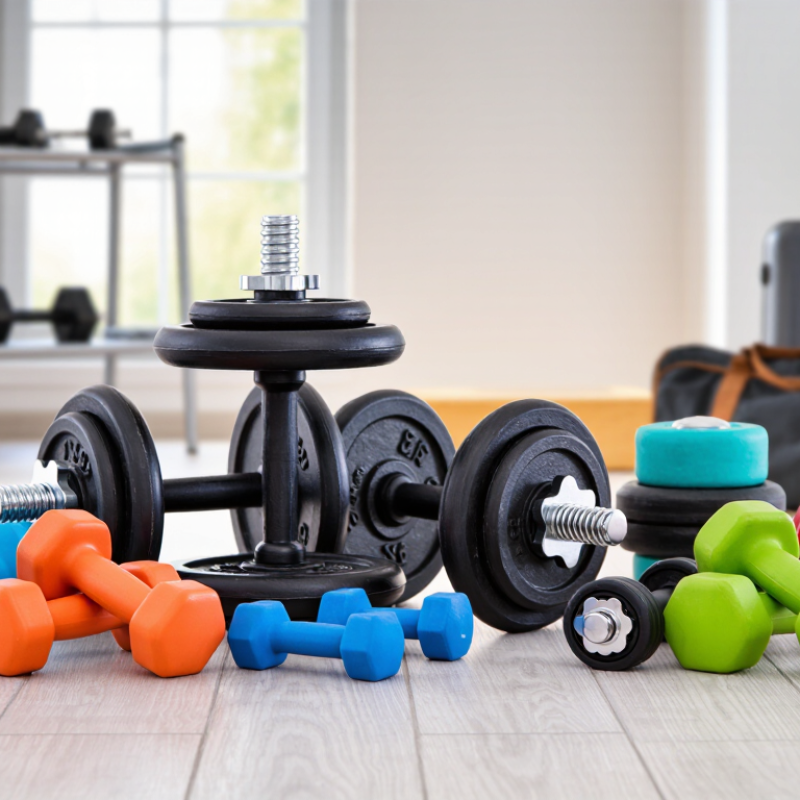
China’s portable dumbbell manufacturing landscape serves fitness retailers, gyms, and online sellers worldwide. Factories commonly produce adjustable, neoprene, cast iron, and compact travel models. Many suppliers offer custom weights, handle textures, packaging, and color options.
In factory evaluations, buyers should inspect material consistency and assembly accuracy. A secure locking system matters during repeated movement. Weight markings should remain readable after handling. Ask for batch records, sample testing, and inspection reports. Not every polished catalog reflects stable production. A low quotation can hide weaker coatings or inconsistent tolerances. That deserves attention.
Tips: Request production samples before placing a large order. Check handle diameter, grip comfort, and storage dimensions. Confirm testing methods with the supplier. Use independent inspections when order value is significant. Keep written specifications. Small details prevent costly misunderstandings.
Portable designs create useful advantages for apartments and travel users. However, compact equipment still needs durable joints, balanced weight distribution, and protective packaging. Export-ready manufacturers usually understand carton testing, moisture control, and clear product documentation. Buyers should also review communication speed and corrective-action records. Reliability is built through repeated evidence, not promises. One weakness remains: product quality may vary between batches if process controls are informal. Regular inspections can reduce that risk.
China Top Portable Dumbbells Manufacturers for Global Buyers
Portable dumbbells now serve home gyms, physical therapy rooms, and compact training studios. Common types include selectorized dumbbells, spin-lock models, and adjustable block designs. Each option changes storage, handling, and maintenance needs.
Selectorized systems use a dial, pin, or sliding mechanism to change resistance quickly. Spin-lock dumbbells use threaded collars and removable plates, offering a simple, familiar structure. Block-style designs usually combine several weight settings in one compact frame. Available loads often start at 2 kg and reach 50 kg per dumbbell. However, the displayed range may describe one dumbbell, a pair, or the total kit. Buyers should confirm this detail in writing.
Tips: Ask for adjustment-cycle testing, handle diameter, plate tolerance, and packaging photos. Check whether the locking system stays secure during overhead movements. A heavier setting should not feel loose or uneven. Stainless steel may resist corrosion, but coating quality still matters. In my experience, compact products can save space but sometimes sacrifice grip comfort. That trade-off deserves a real sample test. Also review load increments, because 2 kg steps feel useful for rehabilitation but may limit stronger users. A supplier with clear test records, consistent measurements, and responsive technical communication is usually easier to trust. Mistakes happen, especially with international specifications. Good documentation helps prevent them.
Portable dumbbell configurations and commonly available specifications for international sourcing
| Portable Dumbbell Type | Adjustment System | Typical Load Range per Dumbbell |
Common Increment | Weight Configuration | Portable Design Features | Suitable Buyer Applications |
|---|---|---|---|---|---|---|
| Fixed Hex Dumbbell | No adjustment; one-piece construction | 2–50 kg | Usually 1–2 kg between lighter sizes; larger sizes may vary by 2.5–5 kg | Single fixed weight per dumbbell | Hexagonal heads reduce rolling; compact storage trays are commonly used | Gyms, studios, hotels, schools, and commercial fitness rooms |
| Fixed Round Dumbbell | No adjustment; one-piece construction | 2–50 kg | Commonly 1–2 kg at lower weights and 2.5–5 kg at higher weights | Single fixed weight per dumbbell | Smooth or contoured heads; easier to move with a rack or carrying case | Strength areas requiring quick, repeated weight changes |
| Spinlock Adjustable Dumbbell | Threaded collars secure removable weight plates | 2–30 kg | Typically 0.5–2.5 kg per side, depending on plate set | Loadable handle with separate plates and collars | Disassembles for compact transport; plates can be stacked in a storage case | Home users, apartment gyms, beginner programs, and budget-conscious buyers |
| Selectorized Plate-Loaded Dumbbell | Dial, selector pin, or indexed locking mechanism | 2–24 kg | Usually 1–2 kg per selection step | Internal or enclosed plates selected without manual plate handling | Fast changes; integrated base helps contain plates when not in use | Home gyms, personal trainers, and compact workout spaces |
| Block-Style Adjustable Dumbbell | Sliding selector, pin, or removable block sections | 2–40 kg | Commonly 2–4 kg per step | Stacked steel or composite blocks connected to one handle | High space efficiency; supplied with a fitted tray or compact cradle | Residential users, mobile trainers, and small personal-training studios |
| Loadable Handle Dumbbell | Collars, locking pins, or quick-release plate retainers | 2–50 kg | Determined by available plate sizes; often 1.25–5 kg | Short handle accepts standard or proprietary weight plates | Handle and plates separate for shipping; supports broad loading flexibility | Strength athletes, wholesalers, and buyers needing higher load capacity |
| Rubber-Coated Adjustable Dumbbell | Threaded, pin-lock, or selector-based adjustment | 2–32 kg | Usually 1–2 kg per step | Metal core or plates with protective rubber coating | Reduced floor noise and improved surface protection during home use | Apartment gyms, rehabilitation areas, and noise-sensitive environments |
| Cast-Iron Adjustable Dumbbell | Threaded collars with cast-iron plates | 2–40 kg | Commonly 1.25–5 kg, based on plate assortment | Bare cast-iron plates mounted on a steel handle | Durable and compact; requires care against moisture and floor impact | Value-oriented retail channels and traditional home strength training |
| Competition-Style Fixed Dumbbell | No adjustment; precision fixed-weight format | 10–50 kg | Often 2 kg at lower ranges and 2.5 kg at higher ranges | Fixed steel or iron heads with a balanced handle | Stable grip geometry; best transported in pairs or on a dedicated rack | Commercial strength facilities and performance-focused training areas |
| Neoprene-Coated Dumbbell | No adjustment; fixed light-weight construction | 0.5–10 kg; commonly specified within the 2–10 kg range | Usually 0.5–1 kg between sizes | Solid metal core with a textured neoprene exterior | Lightweight, easy to carry, and suitable for shelves, bags, or compact racks | Aerobic classes, physical therapy, travel workouts, and light resistance training |
Specification note: Load ranges and increments shown are typical commercial configurations available in the international fitness-equipment market. Exact maximum load, plate compatibility, dimensions, surface finish, packaging, and adjustment steps should be confirmed against the final product specification and applicable safety requirements.
For global dumbbell buyers, safety begins before powder coating or carton design. ISO 20957-1 establishes general safety principles for stationary training equipment, including stability, load resistance, moving-part clearances, and user instructions. ISO 20957-2 adds requirements for strength-training equipment, where handles, benches, supports, and adjustable loads face repeated stress.
ASTM F2276 provides another useful testing framework for fitness equipment. It addresses structural performance, foreseeable misuse, labeling, and inspection points. A practical factory check should include loaded-drop simulations, grip pull tests, fastener torque verification, and repeated adjustment cycles. The dumbbell must remain secure after sweat, vibration, and thousands of repetitions. Small details matter. A loose collar is not a minor defect.
EN 957 remains a familiar reference in European procurement files, although buyers should verify the current applicable standard and conformity route. The 2022 WHO Global Status Report on Physical Activity estimated that 31% of adults worldwide were insufficiently active, representing about 1.8 billion people. This expands demand for compact home equipment, but it also increases responsibility for clear warnings and dependable construction. Compliance documents can look complete while practical testing remains shallow. That gap deserves attention. Export teams should request signed test reports, calibrated-equipment records, material traceability, and corrective-action evidence. Independent laboratory review is preferable when production changes, even if the original sample passed.
This chart compares the publication years of key international and regional fitness-equipment safety references. ISO 20957-1 covers general safety requirements, ISO 20957-2 addresses strength-training equipment, ASTM F2276 provides a fitness-equipment specification framework, and EN 957-1/-2 are earlier European references for general and strength-training equipment requirements. Buyers should verify the applicable edition and conformity evidence for each product.
Global buyers should evaluate portable dumbbell suppliers through measurable production details, not attractive catalog photos. MOQ often ranges from 100 to 500 sets, depending on coating, handle design, and packaging. A lower MOQ can reduce inventory pressure, but it may increase unit cost. Ask for a written quotation with product weight, tolerance, carton dimensions, and inspection terms.
A reliable supplier should explain how it manages 15–30-day lead times. Confirm whether this period covers production only or includes packaging and quality checks. I recommend requesting a sample before placing a bulk order. Check the locking mechanism, grip comfort, surface finish, and resistance to loose parts. Small defects become expensive when hundreds of cartons reach a warehouse. Lead times can also slip during material shortages, so a realistic buffer matters.
OEM capacity requires more than printing a logo. Suppliers should provide drawings, color references, packaging mockups, and a clear approval process. Ask who controls tooling, how design changes affect MOQ, and whether replacement components are available. An experienced manufacturer can usually share factory photographs, inspection records, and export documents. Still, paperwork is not proof of consistent quality. A factory may pass one inspection and miss another. That is why staged orders, random checks, and documented corrective actions remain practical safeguards for global buyers.
For global buyers, selecting China-based portable dumbbell manufacturers requires more than checking price, weight, and packaging.
Export compliance should begin with accurate product classification. HS Code 9506.91 commonly covers articles and equipment for general physical exercise, but customs authorities may interpret details differently. Buyers should confirm the code with a licensed customs professional in the destination market.
CE compliance needs careful judgment. Simple cast-iron or steel dumbbells may not require CE marking under European rules. However, products with electronic counters, sensors, or powered adjustment systems may fall under relevant directives.
A manufacturer should provide technical documentation, risk assessments, test reports, and a Declaration of Conformity when applicable. CE is not merely a printed logo.
RoHS and REACH also require product-specific review. RoHS mainly applies to restricted substances in electrical and electronic equipment, while REACH addresses chemicals, including substances in coatings, plastics, rubber grips, and packaging.
Request material declarations, supplier evidence, and laboratory results for heavy metals, phthalates, and other restricted substances. Check batch traceability. A missing document can delay clearance.
No checklist is perfect. We sometimes find that a supplier’s old test report covers a similar product, not the actual model. Buyers should verify testing dates, product photographs, factory details, and destination requirements before shipment.