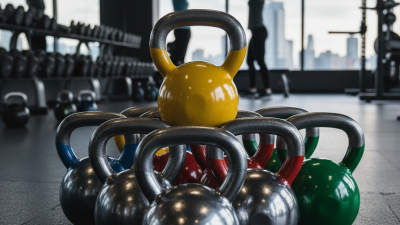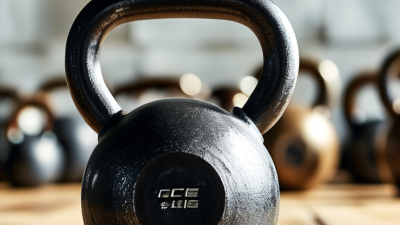
China’s Competition Kettlebells industry has developed quickly, serving gyms, strength clubs, sports teams, and international distributors. This guide examines ten notable Chinese manufacturers and their practical differences.
The evaluation considers casting quality, handle geometry, weight accuracy, surface finish, durability, and production consistency. It also reviews certifications, export experience, customization options, and quality-control procedures. These details matter during repeated snatches, cleans, and heavy swings. A kettlebell may look flawless in a product photo, yet small handle variations can change grip comfort and movement rhythm.
Pavel Tsatsouline, a respected strength coach and kettlebell educator, wrote, “The kettlebell is an ancient Russian weapon against weakness.” That idea remains relevant. Competition Kettlebells must support disciplined training, not merely attractive marketing. Their handles should feel predictable. Their bodies should maintain stable dimensions. Their coatings should resist chips, sweat, and repeated contact with platforms.
This introduction does not treat factory scale as automatic proof of excellence. Larger output can support consistency, but it cannot replace inspection. Some manufacturers publish detailed specifications. Others provide limited public data, which requires further verification through samples, audits, and buyer feedback.
That is the difficult part.
The following ranking is therefore a practical comparison, not an unchangeable verdict. Manufacturing capabilities can shift with equipment, management, materials, and export standards. Buyers should confirm current tolerances, warranty terms, packaging strength, and delivery performance before placing large orders. Small details often decide long-term value.
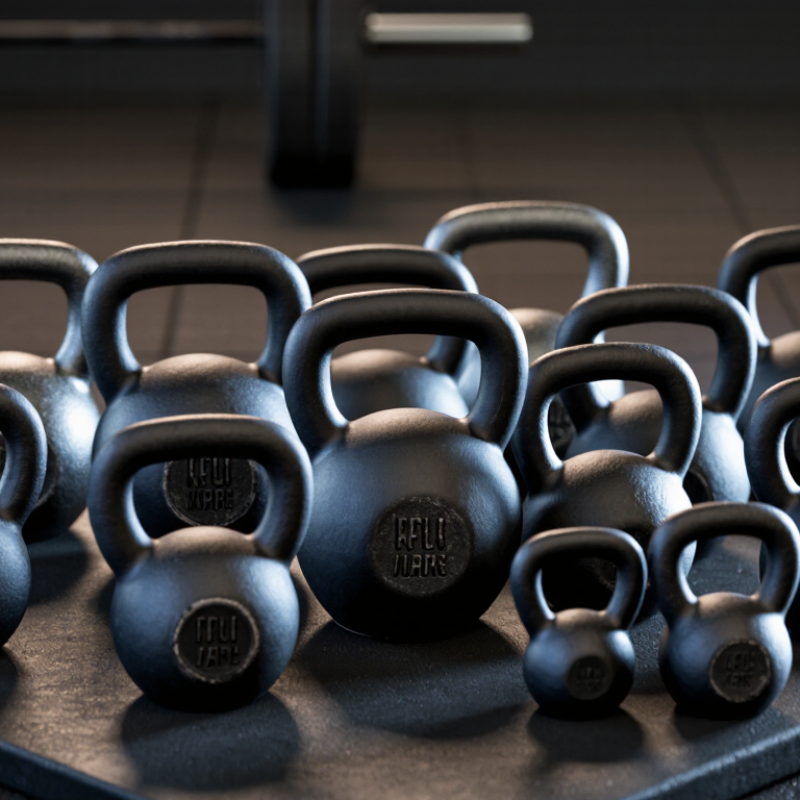
A competition kettlebell manufacturer in China is defined by repeatable engineering, not a polished catalog. The shell should keep a consistent size, handle opening, and center of mass across production batches. Small differences change swing timing and grip comfort. Experienced factories use controlled molds, measured steel, and documented welding procedures. They inspect handle thickness, surface finish, and base stability before packing. These details are easy to overlook. Athletes notice them quickly.
Reliable production also depends on traceability. Each batch should link to material records, inspection results, and operator checks. Load testing, dimensional sampling, coating adhesion checks, and drop simulations can reveal weak points before shipment. A capable manufacturer explains its testing limits instead of claiming perfection. It should provide clear tolerances, sample approval, packaging drawings, and corrective-action reports. That paper trail supports buyers when specifications change or a delivery problem appears.
Practical experience matters beyond the factory floor. Manufacturers serving gyms and competition organizers understand repeated handling, chalk exposure, humid storage, and crowded freight conditions. They can adjust coating texture, carton protection, and labeling without losing measurement accuracy. Still, no supplier gets every detail right. A sample may pass inspection yet feel awkward in an athlete’s hand. Serious teams invite feedback, compare samples, and improve the next batch. That willingness to revisit assumptions often separates a dependable partner from a low-cost producer.
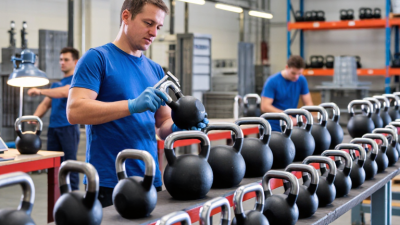
China Top 10 Competition Kettlebell Manufacturers
The top ten manufacturers are evaluated through evidence, not attractive catalogs. Reviewers inspect factory experience, production equipment, quality systems, and export records. A factory should provide clear specifications for weight, dimensions, handle diameter, and surface finish. These details matter during repeated training.
Physical samples reveal more than paperwork. Evaluators may measure a 24-kilogram kettlebell with calibrated scales and digital calipers. They inspect handle symmetry, flat bases, casting marks, and coating consistency. A smooth handle supports a secure grip, while uneven edges can cause discomfort. Drop testing and repeated load checks also help expose hidden weaknesses.
Documentation strengthens the evaluation. Reliable manufacturers maintain batch records, inspection reports, material details, and corrective-action logs. They should explain how rejected units are separated and replaced. Communication matters too. Slow answers can signal weak control.
No score is perfect. A supplier may offer excellent casting but inconsistent color. Another may provide strong documentation but limited customization. Evaluators should record these compromises instead of hiding them. Independent testing, transparent factory visits, and repeat orders create stronger evidence than one successful sample. That is the part many rankings miss.
The following weighted evaluation framework is designed for comparing Chinese manufacturers of competition kettlebells. It focuses on measurable product, manufacturing, quality, and supply-chain indicators rather than company or brand names.
| No. | Evaluation Dimension | Weight | What Is Measured | Recommended Evidence | Scoring Range |
|---|---|---|---|---|---|
| 1 | Manufacturing Experience | 10% | Years producing kettlebells or comparable cast-iron and steel fitness equipment, supported by stable production records. | Factory profile, production history, audited supplier records, and verified export documentation. | 0–10 |
| 2 | Material and Casting Quality | 15% | Consistency of iron or steel composition, casting integrity, surface soundness, and freedom from cracks, voids, or sharp defects. | Material specifications, incoming inspection records, casting inspection reports, and independent product testing. | 0–15 |
| 3 | Weight Accuracy | 10% | Actual weight consistency against the declared nominal weight across production batches and the complete competition range. | Calibrated scale records, batch sampling plans, tolerance specifications, and third-party verification. | 0–10 |
| 4 | Competition Dimensions | 10% | Uniformity of handle diameter, handle opening, bell profile, base stability, and size consistency across different weights. | Technical drawings, dimensional inspection reports, calibrated gauges, and representative samples. | 0–10 |
| 5 | Handle Ergonomics and Finish | 10% | Grip comfort, smooth transitions, absence of burrs, balanced geometry, and suitability for repetitive competition movements. | Physical sample review, athlete feedback, surface-finish inspection, and documented corrective actions. | 0–10 |
| 6 | Coating and Corrosion Resistance | 10% | Adhesion, surface uniformity, resistance to chipping and abrasion, and protection against normal storage and gym-use corrosion. | Coating process records, adhesion tests, abrasion testing, corrosion testing, and finished-product inspection. | 0–10 |
| 7 | Quality Management and Testing | 10% | Effectiveness of incoming, in-process, and final inspections, including traceability and nonconformity control. | Quality manual, inspection checklists, calibration records, corrective-action reports, and applicable ISO 9001 documentation. | 0–10 |
| 8 | Production Capacity and Lead Time | 7% | Ability to maintain consistent quality during trial orders, repeat orders, seasonal demand, and multiple weight configurations. | Monthly capacity data, production schedules, historical lead-time performance, and on-time delivery records. | 0–7 |
| 9 | Customization and Engineering Support | 8% | Capability to support custom dimensions, coatings, packaging, markings, tooling, sampling, and design revisions. | CAD drawings, sample-development records, tooling capability, engineering response times, and approved prototypes. | 0–8 |
| 10 | Compliance, Packaging, and After-Sales Support | 10% | Accuracy of product documentation, export packaging, labeling, shipment protection, warranty handling, and response to quality claims. | Packing specifications, carton drop-test records where required, product declarations, warranty terms, and claim-resolution data. | 0–10 |
| Total Evaluation Weight | 100% | Manufacturers can be ranked by their weighted score after document review, sample testing, and factory verification. | |||
China Top 10 Competition Kettlebell Manufacturers
Profiles of China’s Top 10 Competition Kettlebell Manufacturers
China’s leading competition kettlebell manufacturers show different production strengths. One focuses on precision casting and consistent shell thickness. Another specializes in bright color coatings for fast weight recognition. A third supplies dense steel cores for controlled movement. Some operate automated machining lines, while others rely on skilled manual inspection. There are also factories experienced in stainless steel, custom logos, bulk orders, and export packaging. One smaller workshop emphasizes flexible sampling. Another develops handles for athletes with larger hands. The final profile combines kettlebell production with broader strength equipment manufacturing.
Material control matters. Competition kettlebells should maintain stable dimensions across the same weight class. A 24-kilogram bell must feel predictable during swings, cleans, and snatches. Inspectors usually check handle diameter, surface smoothness, balance, paint adhesion, and weight tolerance. Small flaws can become obvious during repeated training. Experienced buyers should request inspection records, sample measurements, coating details, and factory photographs. A factory visit can reveal more than a polished catalogue.
No supplier is perfect. Some manufacturers offer excellent machining but limited packaging options. Others quote attractive prices while requiring longer sample development. Claims about accuracy still need independent verification. Buyers should compare several samples under identical conditions. Ask how rejected castings are handled. Ask who approves the final batch. These questions may feel slow, but they protect consistency. In practical use, a smooth handle and stable base often matter more than impressive marketing language.
China Top 10 Competition Kettlebell Manufacturers: Materials, Standards, and Production Capabilities
When evaluating China’s top ten competition kettlebell manufacturers, material selection deserves close attention. Most reliable factories use solid steel rather than cast iron for consistent dimensions. Steel hardness affects durability, impact resistance, and surface stability. A smooth powder-coated finish should resist chipping during repeated training. Handle width and opening size must remain uniform across every weight. Small deviations can change grip comfort and swing control.
Production capability matters as much as the raw material. Look for CNC machining, controlled welding, automated coating, and weight verification at several stages. A capable factory should maintain molds, inspect casting or forming accuracy, and record batch results. Useful documents include material certificates, inspection reports, and quality-management records. Competition specifications may differ by market or federation, so buyers should confirm current dimensional requirements before placing an order. Samples alone are not enough. A polished sample can hide weak process control.
Tips: Request three samples from different production batches. Measure weight, handle diameter, opening height, and base flatness. Check for sharp edges, coating bubbles, and unstable placement. Ask how rejected units are recorded and corrected. If answers remain vague, pause the purchase. I have seen attractive samples fail under practical inspection. That is an uncomfortable reminder: supplier claims need evidence, not confidence alone. Regular pre-shipment checks can reduce these risks, although they cannot replace an honest factory assessment.
Reference view of ten nominal competition kettlebell weight classes commonly used in organized kettlebell sport. The chart does not rank or disclose individual manufacturers.
The displayed values are nominal weight classes in kilograms; exact approved classes and tolerances may vary by federation and event rulebook.
China Top 10 Competition Kettlebell Manufacturers
Choosing a Chinese competition kettlebell supplier requires more than comparing prices. Start with factory experience, production capacity, and quality records. Ask for recent product samples, not only catalog images. Competition kettlebells should maintain consistent dimensions, handle openings, and weight tolerance. Small differences can affect grip and training rhythm.
Request material details for the shell and handle. Steel quality matters. So does welding accuracy. Check whether the supplier uses calibrated scales and documented inspection procedures. A reliable manufacturer should explain its sampling plan, coating process, and final inspection clearly. Ask for photos or videos from the production line, but do not treat them as complete proof. An independent factory audit is stronger. So is a physical sample.
Test the sample yourself. Place it on a flat surface. Measure the handle diameter and inspect the coating for rough edges, pits, or uneven color. Discuss packaging before ordering. Poor protection can damage handles during long-distance transport. Confirm production lead time, payment terms, replacement procedures, and export documents in writing.
Communication deserves attention. A supplier that answers quickly may still miss technical details. Use a specification sheet with drawings and measurable tolerances. Recheck every revision. This step feels slow, yet it prevents expensive mistakes. Some buyers focus too heavily on the lowest quotation. I have found that a slightly higher price may reflect better inspection and steadier production, but this is not always true. Evidence matters more than promises.