Leave Your Message

China Top 10 Adjustable Dumbbell Manufacturers

China’s Adjustable Dumbbells market includes manufacturers with different designs, production capabilities, and quality-control practices. A polished product photo cannot show how a selector feels or whether plates lock securely. Buyers need clearer evidence.

Strength and conditioning coach Mike Boyle offers a useful reminder: “Everything works, but nothing works forever.” His point concerns training methods, not dumbbell construction, yet it applies to equipment choices: usefulness depends on fit, durability, and regular reassessment. Small details matter. A handle that feels slippery, a dial that sticks, or a loose plate can affect a workout.

This guide to China’s top 10 Adjustable Dumbbell Manufacturers gives buyers a practical starting point. It considers factors such as product range, stated materials, customization options, inspection procedures, and communication with overseas customers. These details help readers prepare better questions before requesting samples or quotations. Manufacturer rankings, however, are not guarantees of performance. Specifications should be checked against product samples, test records, and clear purchase terms.

Some gaps remain. Public product information may not reveal long-term wear, and supplier claims can be difficult to compare directly. That uncertainty deserves attention, not a tidy sales pitch. Use this overview to identify candidates, then verify the details that matter for your intended use. For distributors, retailers, and fitness brands, careful comparison can reduce avoidable surprises and support a more informed sourcing decision.
China Top 10 Adjustable Dumbbell Manufacturers

Adjustable Dumbbell Scope: 2–24 kg Sets and 1–2 kg Increments

A practical adjustable-dumbbell range is 2–24 kg per handle, with selectable 1 kg or 2 kg steps. That span can cover light shoulder raises, controlled presses, and heavier rows without storing a full rack. Buyers should verify whether “24 kg” means per dumbbell or the pair’s combined weight. Also check the starting load; some users need less than 2 kg for lighter exercises. Small details matter.

The ACSM’s 2023 Worldwide Survey of Fitness Trends ranked strength training with free weights fourth among 20 trends. This signals strong interest, but it does not prove one adjustment system suits every user. For manufacturers in China, clear load labeling, secure locking, and repeatable adjustments deserve as much attention as maximum capacity. A 1 kg increment allows finer progression for smaller movements; 2 kg steps can make heavier lifts simpler to adjust. Still, those jumps may feel abrupt on some exercises.

Tips: Request a load chart showing every setting, handle weight, and whether listed weights apply per dumbbell. Test the selector repeatedly; a smooth first adjustment does not guarantee lasting firmness.
Product Engineering: Steel Density of Approximately 7.85 g/cm³

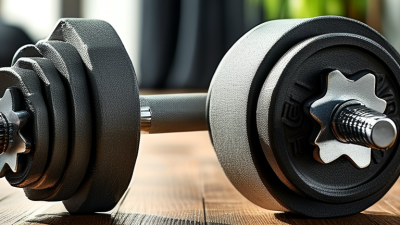
In adjustable dumbbells, steel density of approximately 7.85 g/cm³ gives engineers a useful starting point for estimating component mass. A compact steel plate measuring 10 by 8 by 1 centimetres would weigh about 628 grams before machining or coating. That estimate helps teams balance plate dimensions, handle strength, and the total load range. Small details matter.

For manufacturers, density is only one part of product engineering. Internal cavities, machining tolerances, surface finishes, and material variation can all affect the finished weight. A careful production check can compare sample components against calculated mass and measured dimensions. It is easy to overvalue the number. A specification alone cannot confirm consistent steel quality or dependable adjustment; inspection records and repeatable batch measurements provide stronger evidence. Engineers should also test how plates sit on the handle, since a small mismatch may cause movement or uneven loading. The calculation is useful, but real components still need scrutiny.

China’s Top 10 Manufacturers: Product Ranges, Factory Bases, and Export Profiles

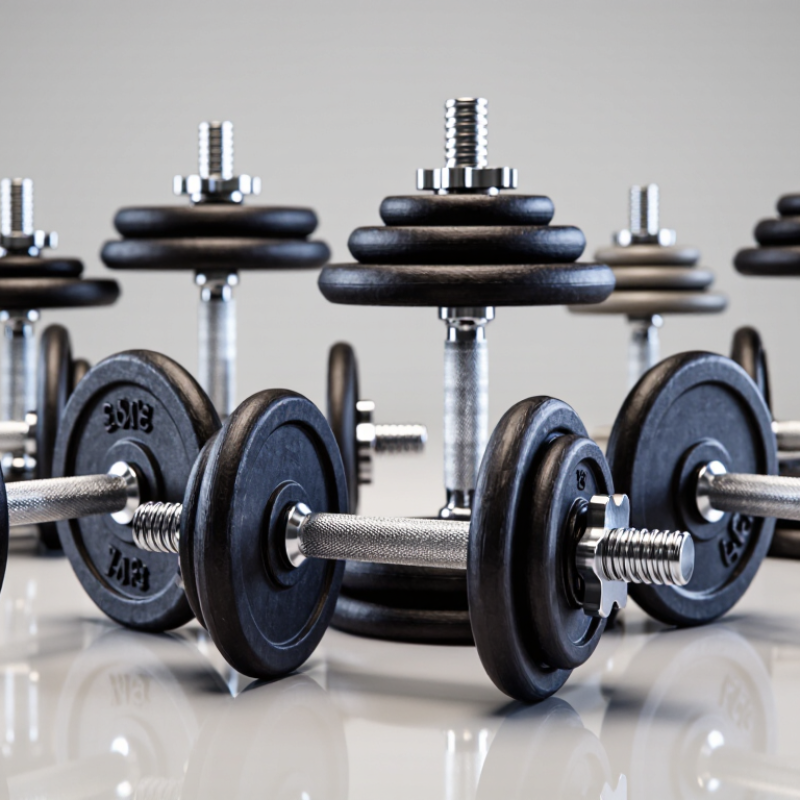
China’s leading adjustable-dumbbell manufacturers differ in product range, factory location, and export capability. Some focus on selectorized models, where a dial changes the load; others make spin-lock sets with threaded collars and separate plates. Buyers should compare weight increments, handle knurling, locking tests, and carton drop-test records. Small details matter. A loose selector can stop a shipment from becoming repeat business.

Factory bases are often associated with established manufacturing regions, but a city name alone proves little. Request the actual production address, recent audit records, and a clear split between in-house work and subcontracting. China’s top suppliers may offer home-use dumbbells, commercial sets, benches, or storage racks, while export experience varies by market and shipment size. Check sample lead time, spare-part availability, packaging dimensions, and export references before comparing prices.

Industry context helps, but it is not a purchase forecast. ACSM’s 2024 Worldwide Survey of Fitness Trends placed strength training with free weights fourth among 45 trends. That supports continued relevance for strength equipment, not guaranteed demand for any supplier. UN Comtrade’s HS 950691 category covers broader exercise equipment, so its trade figures cannot isolate adjustable dumbbells. Read the numbers carefully. A polished catalog is not factory evidence.

China Top 10 Adjustable Dumbbell Manufacturers - China’s Top 10 Manufacturers: Product Ranges, Factory Bases, and Export Profiles

This non-ranked overview summarizes common adjustable-dumbbell product categories and manufacturing capabilities associated with China’s fitness-equipment industry. The profiles are anonymized and are not verified company-specific records.

Profile Common Product Range Typical Factory Base Manufacturing Focus Typical Export Profile
01 — Selectorized compact systems Dial- or selector-adjusted dumbbells, commonly sold as pairs with storage trays. General fitness-equipment production areas in eastern China; exact factory locations vary by supplier. Integrated weight selection, molded housings, metal weight plates, and product assembly. Often offered for retail, e-commerce, and private-label programs; destination markets depend on the buyer and supplier.
02 — Plate-loaded adjustable sets Threaded or spin-lock dumbbells with removable plates, collars, and metal handles. Metalworking and sporting-goods manufacturing regions, including parts of Zhejiang, Jiangsu, and Shandong. Steel-bar processing, plate casting or machining, surface finishing, and set packaging. Suitable for wholesale and distributor orders; export specifications commonly include packaging and labeling requirements set by the importer.
03 — Quick-change selector designs Handle-operated or lever-operated systems that change the selected load without manually removing each plate. Factory base is supplier-specific; production may combine metal fabrication, plastics, and final assembly. Mechanical selector components, fit testing, assembly control, and protective packaging. Commonly marketed through specialty fitness retailers and online channels; shipping costs are affected by product weight and carton dimensions.
04 — Cast-iron weight systems Adjustable sets using cast-iron plates with threaded bars or compatible selector mechanisms. Metal-casting and fitness-equipment clusters in northern and eastern China. Iron casting, deburring, coating, dimensional checks, and assembly of weight sets. Typically suited to bulk orders and established fitness-equipment distribution; market access requirements vary by destination.
05 — Cement-filled plate systems Budget-oriented adjustable sets using cement-filled or composite plates and metal or polymer-coated bars. General sporting-goods and consumer-products manufacturing areas; location varies among factories. Plate molding, filling, handle production, and cost-focused set assembly. Often positioned for entry-level retail ranges; buyers should confirm carton dimensions, net weight, and breakage protection.
06 — Rubber- or polymer-coated systems Adjustable dumbbells with coated plates or protective components designed to reduce surface impact and noise. Manufacturing bases with access to metal fabrication and polymer molding or coating processes. Metal weight production combined with coating, molding, or finishing operations. May be supplied to home-fitness and commercial-equipment channels; coating durability and odor specifications should be agreed in advance.
07 — Barbell-and-dumbbell combination sets Convertible kits with dumbbell handles, connecting bars, plates, and collars. Broadly available across China’s sporting-goods manufacturing regions. Multi-component kitting, accessory matching, assembly instructions, and retail-ready packaging. Commonly sold as boxed consumer sets for online or wholesale distribution; package size can materially affect freight cost.
08 — Home-gym space-saving systems Compact adjustable sets designed for home use, often with trays or integrated storage. Supplier-dependent locations, generally combining metalworking with plastic-part production and assembly. Space-efficient design, handling comfort, storage components, and consumer packaging. Frequently suited to direct-to-consumer and e-commerce supply; drop-test and transit-protection requirements should be specified by the buyer.
09 — Commercial-use adjustable equipment Higher-duty selectorized or plate-loaded equipment intended for gyms, studios, and institutional facilities. Fitness-equipment manufacturing bases with metal fabrication and equipment assembly capability. Durability-oriented construction, finish consistency, component replacement planning, and quality checks. Usually supplied through commercial-equipment dealers or project orders; buyers should confirm warranty terms and spare-parts availability.
10 — OEM and private-label production Various adjustable-dumbbell formats produced to a buyer’s selected load range, finish, packaging, and branding brief. Available from export-oriented factories in multiple Chinese manufacturing regions; no single factory base applies. Customized specifications, logo application, packaging adaptation, sampling, and production coordination. Export capability is supplier-specific. Importers should verify certifications, test reports, production capacity, lead times, and export references directly.

Note: The entries describe product and manufacturing profiles, not ten named or ranked manufacturers. Regional references are broad industrial descriptions rather than confirmed factory addresses. Verify supplier identity, factory location, specifications, certifications, and export history before purchase.

Manufacturing and Quality Control: Casting, CNC Machining, and Load Testing

Adjustable dumbbells depend on more than a clever weight-selection system. Their safety begins with consistent manufacturing. During casting, workers inspect each metal component for surface cracks, trapped air, and uneven edges. These flaws can affect fit or durability. Small defects matter. A casting that looks acceptable from a distance may still need closer inspection.

CNC machining brings mating surfaces and locking parts closer to their required dimensions. Operators check critical measurements with calibrated gauges, especially around pins, grooves, and weight plates. Clean, repeatable machining helps the selected plates seat evenly. It does not fix every upstream problem, though. If castings vary too much, extra machining can increase scrap and hide process weaknesses rather than solve them.

Load testing checks the assembled dumbbell under controlled conditions. A practical program can include repeated selection cycles, static loading, and inspection of locks after testing. Records should identify the tested unit, measured load, and any failure or adjustment. Testing every possible use condition is unrealistic. That limitation deserves honest attention. Manufacturers can still improve confidence by combining documented tests with routine sampling, clear inspection criteria, and prompt review of recurring defects.

Supplier Evaluation: Capacity, Certifications, MOQ, and Lead-Time Metrics

China Top 10 Adjustable Dumbbell Manufacturers
Supplier Evaluation: Capacity, Certifications, MOQ, and Lead-Time Metrics

A shortlist is only a starting point. Compare each supplier’s monthly output with your forecast, then ask for recent production records and a sample inspection report. The ACSM 2025 Worldwide Fitness Trends survey ranked traditional strength training fifth, signaling sustained interest in strength-focused equipment. It does not predict dumbbell orders, but it gives buyers useful market context. Check whether quoted capacity is dedicated to adjustable dumbbells or shared across several product lines.

Tips: Ask for the current ISO 9001 certificate and verify its scope and expiry date. Request written details for minimum order quantity, tooling charges, and spare-part availability. For lead times, separate sample approval, production, and shipping; a single estimate can hide delays. Confirm how handles, locking mechanisms, and weight plates are checked before packing.

Compare quotes using the same specification: weight increments, material, finish, carton dimensions, and packaging tests. Ask suppliers to show a real production timeline, including peak-season assumptions. A factory tour or live video walkthrough can help verify equipment and workflow, though it cannot replace independent inspection. Be cautious when capacity claims lack records. One overlooked detail: changing packaging after approval may affect cost and dispatch dates.